Question 2: How effective is the combination of your main product and the ancillary texts?
Thursday, 19 April 2012

Jade Brammah - Critical Evaluation - Question 3
Question 3: What have you learned from your audience feedback?


Jade Brammah - Critical Evaluation - Question 4
Question 4: How did you use new media technologies in the construction and research, planning and evaluation stages?
New media technologies have played a very important role in our project this year. Firstly we have hugely relied on the internet to help us with our research. We looked at clips on Youtube for inspiration for our film and used websites such as Shortsbay, Dafont and Soundjay to create effective logos, sound effects for our film and to look at other short films that exist to help us gather information and experience that we could use in our film. We have even used the internet to create our blog which contains all our work and shows the progression we have made throughout the year and the journey we have taken in making our film and the other forms of media that promote it. Without this media tool we would not have an effective portfolio of work and wouldn't have created a film that lives up to the standards that were expected of us. Our posts contain images, videos, quotes and information that has been taken from the internet that were vital to our work. We used eBay to advertise our fake product so that we could take a screenshot of the seller's page and feature this in our film. I also used the social networking site, "Facebook," to gather feedback via comments on an upload of our film that we could take into account and use to make improvements on our film before we released a final export. This helped us to amend certain problems in our film which we may not have noticed ourselves. We had problems exporting our film from Final Cut Express as it seemed to take a substantial amount of time and after this had been achieved we again encountered problems with uploading our film to Youtube as the internet at our college was not compatible with the site.
Since we created our project on Mac computers we used a lot of programs featured on these such as Final Cut Express to edit and create our film and trailer, Garageband to create a radio trailer, Photoshop Elements to create a poster, logo and banner for our trailer, Celtx to write the script, Word to create various documents and the webcam to take pictures of props for our blog posts.


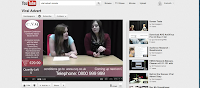


Final Cut Express was the most useful media tool we used as it helped us to create our film and trailer. For our trailer we wanted to create banners that would go across the side and bottom of the clip so that it would look like a real QVC style advert. We accomplished this by creating them on Photoshop Elements, importing them onto Final Cut and adding a scrolling text along the bottom and static text at the side. This allowed us to practice our editing skills before tackling our actual film so that we would be more experienced for it and be able to develop our skills. One big thing that featured in both our advert and film was the rewinding of certain clips, we practiced this in our trailer changing the speed to make the clip play backwards. I edited almost the entirety of our trailer which allowed me to gain substantial practice and experience in editing and how to create desired effects that we would later feature in our finished film. A problem I encountered was that not all of the footage was continuous and therefore the positioning was different, I had to alter this by using framewire to change their position to match the rest of the clips. We applied transitions to our film to help it run smoother and chose a fade in because we felt it worked best with the tone of our film. We had to adjust the brightness and colour of our film in certain places as when we looked at it parts were slightly yellow, we added filters to achieve this. Also in parts the music was too loud as it drowned out the speech, so we had to adjust the volume on the music to make it lower and make the voice overs louder.

I used Garageband and Final Cut to create our radiotrailer and extracted specific sound bites from our film to create an idea of what our film is about. I used important points from our film and used the zoom recorder to record a voice over for the beginning and end of the trailer that would introduce the film and let the audience know about its release. I edited the sound bites together to create a smooth running advert and placed the rewinding sound effect from our film in the middle. I then added the music from our film and placed it over the top of the audio to finish it off.
We took photos of our cast using a camera and put them on the Mac, we then used Photoshop to create our poster. We used the lasso tool to cut out the images of our cast and the image of a TV, we then placed the image of our female lead in the TV to create a comedic effect and placed the image of our male lead next to this. We had to re-position the images and enlarge them to make the poster flow more smoothly since we didn't feel it looked right at first, the images looked like cut outs which made it look amateur. We added our title design, logo, certificate rating, distributor, college name, website name and poster credits to make it look official. Finally we featured the names of the cast above their images in the same font to that of our title which tied in the poster nicely.


Joe Marshall - Critical Evaluation - Question 1
In what ways does the media product use, develop or challenge forms and conventions of real media products?
At a technical level, the use of final cut was used extensively to make sure we observed the conventions of continuity. For instance we had to make sure when he had his coat unzipped in once scene that it wasn’t zipped in the other. One problem we had was with at the end of the film when she is opening the door. We had shown her opening the door half open, but then for him walking out she was still opening it. We overcame this particular problem by using a jump cut and so missing out a few seconds, and giving an impression of a fast moving action of opening the door. The language of the film stays the same throughout, asdoes the editing, for instance using the same opening and ending title music. We also used the same transitional effects throughout the film.
Our film is a romantic comedy. The conventions of which are a basic boy meets girl, comedy is created by the interaction between each other and other people culminating in a happy ending. Our film reflects this genre, but where the girl usually holds the power, we have subverted this by giving the male role a device that in turn makes him the one that has control of every situation. But at the ending we see that they both go their own separate ways. In this way it could be seen as subverting a stereotypical romantic comedy where in our film it is not a happy ending, even if theaudience might expect there to be one. But mostly it fits a romantic comedy, maybe similar to ‘along came Polly’ or ‘there’s something about Mary’ where some of the situations are cringe worthy and make the audience uncomfortable to watch yet humorous at the same time.

Our film is a comedy, so we have an amount of slapstick and could say it is parodying serious romantic films. Instead of having a charming lead character we have a loveable bumbling fool. And instead of an exciting female counterpart, we have a seemingly uninterested and quite boring one. We have taken a classic romantic genre film and thought about how we could make it as unromantic as possible and what events/actions in a given romantic situation that could achieve that.
We are trying to provide the audience with humour. The film is a comedy and so we obviously want people to laugh at it and find it funny. The goal is to make the audience laugh. There are a few specific parts to our movie, such as the slap in the face that we hope will provide the biggest laughs. We have shown the film to other members of our media class and they have all laughed at it. Overall we are quite confident that we have achieved this. We ourselves find the film funny, and we are confident our sense of humour can transcend ourselves and to our target audience of teenagers and young adults. Overall our film is laugh out loud funny in some places, and awkward humour in others.

When starting our film we studied the genre of films. One romantic comedy I think is similar to ours is ‘Along came Polly’ starring Ben Stiller. There is a scene where he needs the bathroom and goes in, only for him to realise there is no toilet paper. Also he floods the bathroom. It is partly this kind of humour that we were trying to create. Awkward slapstick that makes the audience feels for the character in this situation.
Another example is 50 first dates. This film is similar to ours in that he can rectify any mistakes he made and do over the situation again. They are both romantic comedies and feature the same basic story tool.
In conclusion our film has both developed and challenged forms and conventions of real media products.

Joe Marshall - Critical Evaluation - Question 4
4 How did you use new media technologies in the construction and research, planning and evaluation stages?
We used lots of new media technologies for our film, in this evaluation I will evaluate the different technologies used and what effect it has had on our project.
One of the foremost new media technolgies that we used particularly in research was the internet. We looked at short films and evaluated them to help us with our own film. We also used the internet for this blog, to showcase all the work we have achieved. This tool has been by far one the most useful new media technologies.
photoshop was used to edit photos and create titles. This particularly came in use when trying to create a logo for our project. Photoshop was easy to use, and definitely helped us with our work, but we are not trained in photoshop and so could probably not use it to within its full range of capabilities.
we used celtx to write the script, it was particularly useful with how to set things out, such as spacing and size of the letters. However it took a long time to complete because although it helps write the script as it should be, you are constantly changing from text to speech to location which can get quite annoying if your trying to let the creative juices flow and are constantly having to change from one thing to the other when you just want to write. But overall celtx was incredibly useful and made our script look very professional.

We used a HD video recorder for filming our short film. It was relatively simple to use and when using a tripod as well made sure our film had a professional edge, as opposed to a shaky low quality camera. Using this camera all the time though had its difficulties, such as when we were shooting on location we had to carry it around in a bag, and sometimes when we only had a confined space to film in and the camera was too big and bulky. Thankfully this only happened on one occasion. This camera was instrumental in the construction of our film.
We used a zoom recorder to record a voiceover for or film. I myself had never used one of these before so learning how to use it was interesting. For our film we have an internal monologue from some of the characters and a voice over during some of the action as well, using this zoom recorder we were able to make sure our voices were crisp and clear for our film. It was relatively simple to use and helped us with our final product.
We used final cut express to edit our film. Final cut express helped with constructing our clips and putting it into a film. It is by far one of the best software for film making because it allowed the user the freedom to edit and create their film. One challenge to using this software was that in our film we needed clips to be in reverse. Thankfully final cut had an edit that could do that, it could also fix problems such as colour tone. One of our clips was more blue and the other was brighter and so they didn't go together but final cut made them blend in. One difficulty in using final cut is that we only knew the basics of cutting and editing. When we had to do something more complex we would have to ask for help from someone more specialised in it. Overall final cut has been instrumental in creating our film and also fixing it when we have mistakes.

We used lots of new media technologies for our film, in this evaluation I will evaluate the different technologies used and what effect it has had on our project.
One of the foremost new media technolgies that we used particularly in research was the internet. We looked at short films and evaluated them to help us with our own film. We also used the internet for this blog, to showcase all the work we have achieved. This tool has been by far one the most useful new media technologies.
New media technologies also helped us with our audience research, for instance I took photos of different ones that filled in our questionnaire and showed the answers along side their image. I used final cut express to do this and have the two different images next t0 each other on the video.
photoshop was used to edit photos and create titles. This particularly came in use when trying to create a logo for our project. Photoshop was easy to use, and definitely helped us with our work, but we are not trained in photoshop and so could probably not use it to within its full range of capabilities.
we used celtx to write the script, it was particularly useful with how to set things out, such as spacing and size of the letters. However it took a long time to complete because although it helps write the script as it should be, you are constantly changing from text to speech to location which can get quite annoying if your trying to let the creative juices flow and are constantly having to change from one thing to the other when you just want to write. But overall celtx was incredibly useful and made our script look very professional.

We used a HD video recorder for filming our short film. It was relatively simple to use and when using a tripod as well made sure our film had a professional edge, as opposed to a shaky low quality camera. Using this camera all the time though had its difficulties, such as when we were shooting on location we had to carry it around in a bag, and sometimes when we only had a confined space to film in and the camera was too big and bulky. Thankfully this only happened on one occasion. This camera was instrumental in the construction of our film.
We used a zoom recorder to record a voiceover for or film. I myself had never used one of these before so learning how to use it was interesting. For our film we have an internal monologue from some of the characters and a voice over during some of the action as well, using this zoom recorder we were able to make sure our voices were crisp and clear for our film. It was relatively simple to use and helped us with our final product.
We used final cut express to edit our film. Final cut express helped with constructing our clips and putting it into a film. It is by far one of the best software for film making because it allowed the user the freedom to edit and create their film. One challenge to using this software was that in our film we needed clips to be in reverse. Thankfully final cut had an edit that could do that, it could also fix problems such as colour tone. One of our clips was more blue and the other was brighter and so they didn't go together but final cut made them blend in. One difficulty in using final cut is that we only knew the basics of cutting and editing. When we had to do something more complex we would have to ask for help from someone more specialised in it. Overall final cut has been instrumental in creating our film and also fixing it when we have mistakes.

Overall new media technologies were very important in our research, planning, construction and evaluation. They allowed us to be thorough and access things we wouldn't be able to have without them. Using new media technologies also helped us build experience, which would help us if we were to carry on using them after college. In conclusion new media technologies give us the freedom to research almost anything, plan what we are going to do down to the last detail and construct something worthwhile.
Subscribe to:
Posts (Atom)